Every cruise retailer nods to the destination. A themed display, a locally sourced line, a relevant product at the front of the store. Guests notice those things and they matter. But a nod is different from an immersion. The brands winning disproportionate share in cruise retail are the ones whose ranging, storytelling, visual presence, and onboard activation all reinforce the same idea at the same time. When that alignment happens, retail stops feeling like a separate onboard function and starts feeling like part of the voyage itself. The guest does not browse. They participate. And that changes what they spend.
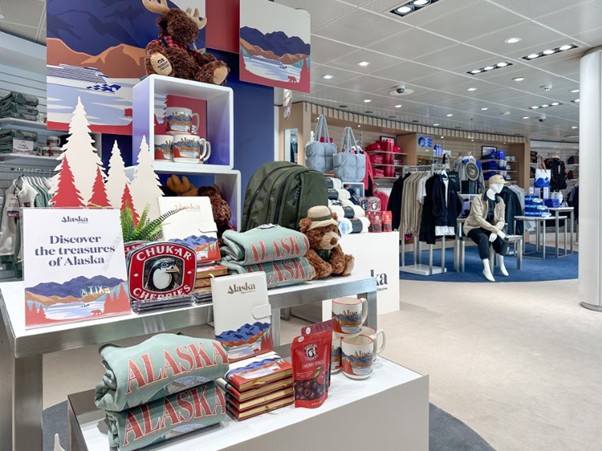
That is the lesson illustrated by our Alaska set-up. A 59% year-on-year increase in destination-themed sales did not come from a new range or a promotional push. It came from a decision to align every element of the retail experience around a single organising idea - that Alaska should feel present in everything the guest encountered, from the product on the shelf to the event in the lobby area, to the conversation with the team. When ranging, visual merchandising, brand partnerships, and onboard activation pull in the same direction simultaneously, the cumulative effect is something qualitatively different from the sum of its parts.
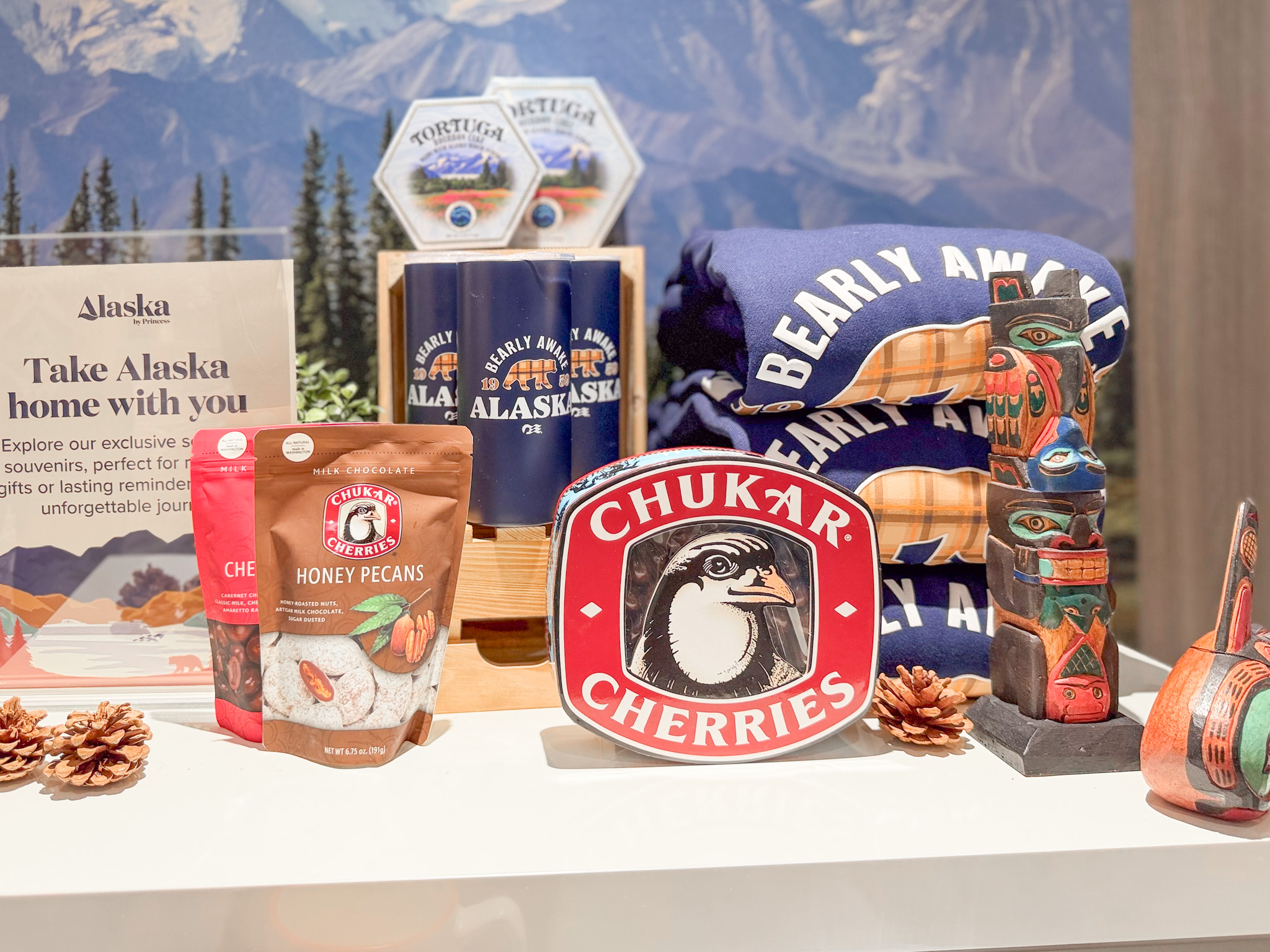
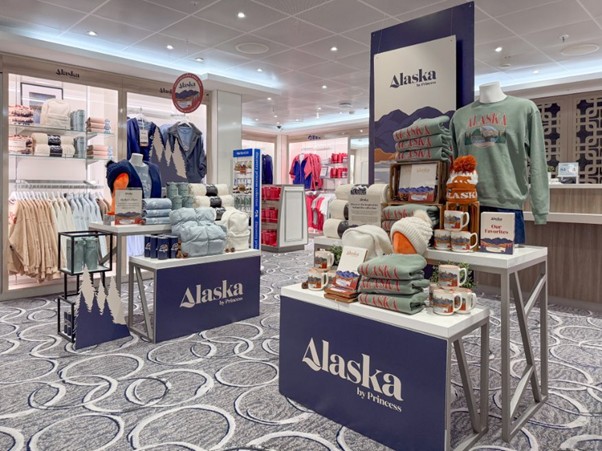
What the Alaska partnerships actually looked like
The brands that performed strongest in Alaska last year were not simply those with the most relevant product. They were the ones willing to commit to the full story. Pendleton and Native Northwest did not provide some products and then step back. Their heritage, craftsmanship, and cultural authenticity were woven into the storytelling environment itself - into the visual merchandising concepts, the onboard events, the way our teams talked about the product. Retail layouts became narrative journeys. Alaska Basecamp, Alaska Moments, Wrap Yourself in Tradition - these were not display concepts. They were platforms that positioned brands within the destination story rather than alongside it.
Brands that invested in activation - artisan showcases, tastings, destination-led events - saw returns that significantly outpaced those that relied on product placement alone. Guests who participated in those moments spent more, explored more broadly across categories, and returned more frequently during the voyage. The activation was not a marketing exercise. It was a commercial lever.
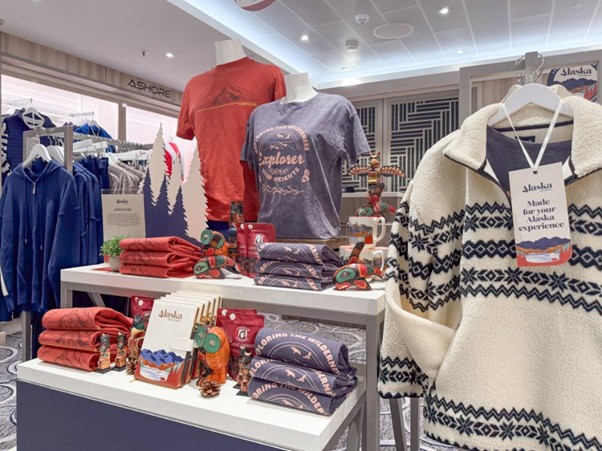
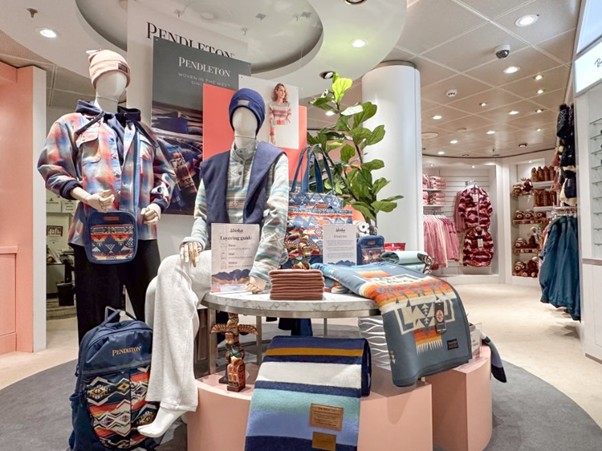
What it means for brand strategy
Our Alaska project has since informed how Harding+ approaches destination retail across the fleet, and the principle is consistent regardless of itinerary or season. The brands building genuine share in cruise retail are those treating destination as an organising principle for their entire onboard strategy - not a temporary add-on or a themed SKU.
That requires a different kind of partnership. It means working with Harding+ on ranging decisions that reflect the specific guest profile and itinerary, not a fleet-wide standard. It means investing in activation that connects the brand to the place and the moment, not just the product category. It means equipping onboard teams with the brand knowledge and storytelling tools to make every guest interaction count. The M1ndset research presented at the DFNI Cruise Conference in Barcelona this month was unambiguous on that last point: 82% of cruise shoppers who interact with retail staff are influenced in their purchase decision. The team on the shop floor is the final and most powerful part of any brand’s destination strategy.
The cruise guest is not short of things to do or places to spend. What earns their attention - and their spend - is retail that feels like it belongs to the voyage they are on. The brands that commit to that fully are the ones winning share. Those that do not are leaving the most distinctive advantage in cruise retail largely untouched.
Keen to explore how we can weave your brand story into future itineraries?
Get in touch →